Sunday, July 18, 2010

Meaty Monday Goes On a Diet


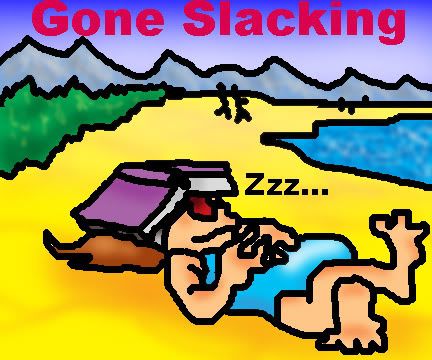
But on the up-side, I got lots of writing done this weekend!

See you later this week with some actual blog content... :-)


Author website: J. J. DeBenedictis

Saturday, July 17, 2010

Study Like a Scholar, Scholar

Just watch this. You'll be amused. It's a parody of this.


Thanks to Sylvia Spruck Wrigley for providing the link on Twitter!


Author website: J. J. DeBenedictis

Monday, July 12, 2010

As Dr. Einstein said, "Creativity is intelligence having fun."

The Creativity Crisis
Linked above is a FANTASTIC article. Please, go read it! It's about creativity, but it also explains what science can tell us about creativity and how to foster it--and why we should. I'll quote some of the bits I found most galvanizing:
What's shocking is how incredibly well Torrance's creativity index predicted those kids' creative accomplishments as adults. Those who came up with more good ideas on Torrance's tasks [as children] grew up to be entrepreneurs, inventors, college presidents, authors, doctors, diplomats, and software developers. Jonathan Plucker of Indiana University recently reanalyzed Torrance’s data. The correlation to lifetime creative accomplishment was more than three times stronger for childhood creativity than childhood IQ.
Emphasis mine. I was surprised when I learned that optimism is a better indicator than IQ or talent for which people will go on to be successful, but this statement blows my mind! Creativity, rather than pure intelligence, is what drives humanity's great leaps forward--and in a huge range of fields, too.

~~~
Yet there is one crucial difference between IQ and CQ scores. With intelligence, there is a phenomenon called the Flynn effect--each generation, scores go up about 10 points. Enriched environments are making kids smarter. With creativity, a reverse trend has just been identified and is being reported for the first time here: American creativity scores are falling.
Okay, setting aside the whole THE SKY IS FALLING insinuations here, this "Flynn effect" fascinates me.

We know that reading to a child early in life increases their success in school when they're older, and studies have found children given books at the end of the school year do better the next academic year than children who weren't given books, but this goes further--this says the more you stimulate a brain, the more capable that brain becomes. You concretely increase the person's mental capacity.

This is stunning to me. I know humans are learning machines, but I always thought stuff like talent, intelligence, and creativity were things you were born with--that you could improve upon them (enormously, even), but they were at least nascent in you from the beginning. The Flynn effect implies that some of your intelligence doesn't exist until you create it through use.

~~~
Overwhelmed by curriculum standards, American teachers warn there's no room in the day for a creativity class. Kids are fortunate if they get an art class once or twice a week. But to scientists, this is a non sequitur, borne out of what University of Georgia's Mark Runco calls "art bias." The age-old belief that the arts have a special claim to creativity is unfounded. When scholars gave creativity tasks to both engineering majors and music majors, their scores laid down on an identical spectrum, with the same high averages and standard deviations. Inside their brains, the same thing was happening--ideas were being generated and evaluated on the fly.
This doesn't surprise me; I've said before that art is just as hard as science and science is just as creative as art. Still, it's gratifying to learn this has been tested and there's convincing evidence to support my flakey opinions on the matter.

~~~

This next bit is particularly interesting in light of what I've said regarding the Show, Don't Tell principle and what you're trying to accomplish with it--chiefly, to make both hemispheres of the reader's brain become engaged in the process of understanding the story.

Given that idea, isn't the following explanation of the process of creativity fascinating? It mirrors engaged reading.

When you try to solve a problem, you begin by concentrating on obvious facts and familiar solutions, to see if the answer lies there. This is a mostly left-brain stage of attack. If the answer doesn’t come, the right and left hemispheres of the brain activate together. Neural networks on the right side scan remote memories that could be vaguely relevant. A wide range of distant information that is normally tuned out becomes available to the left hemisphere, which searches for unseen patterns, alternative meanings, and high-level abstractions.

Having glimpsed such a connection, the left brain must quickly lock in on it before it escapes. The attention system must radically reverse gears, going from defocused attention to extremely focused attention. In a flash, the brain pulls together these disparate shreds of thought and binds them into a new single idea that enters consciousness. This is the "aha!" moment of insight, often followed by a spark of pleasure as the brain recognizes the novelty of what it's come up with.

Now the brain must evaluate the idea it just generated. Is it worth pursuing? Creativity requires constant shifting, blender pulses of both divergent thinking and convergent thinking, to combine new information with old and forgotten ideas. Highly creative people are very good at marshaling their brains into bilateral mode, and the more creative they are, the more they dual-activate.
~~~

This next bit tells you why you should write every day:
In the same way, there are certain innate features of the brain that make some people naturally prone to divergent thinking. But convergent thinking and focused attention are necessary, too, and those require different neural gifts. Crucially, rapidly shifting between these modes is a top-down function under your mental control. University of New Mexico neuroscientist Rex Jung has concluded that those who diligently practice creative activities learn to recruit their brains’ creative networks quicker and better. A lifetime of consistent habits gradually changes the neurological pattern.
Emphasis mine. We think of creativity as being a "struck by lightning" affair, but practising creativity on a daily basis makes you more lightning-prone.

~~~

This next bit is cool because I'm an instructor, and the sort of applied, integrated learning they're talking about here is something everyone involved in education is alert to right now and trying to work into how they teach. Thus, reading this was a great bit of synchronicity for me.

Active teaching methods interest students, engage them, inspire them to work harder, and they learn so much more. Demanding creativity from students is a fantastic way to unlock their passion for learning, but it's also hard work and quite terrifying--for both the instructor and the students, particularly if they're used to the passive teaching of lectures (which most of us are.)
Consider the National Inventors Hall of Fame School, a new public middle school in Akron, Ohio. Mindful of Ohio's curriculum requirements, the school’s teachers came up with a project for the fifth graders: figure out how to reduce the noise in the library. (...) Along the way, kids demonstrated the very definition of creativity: alternating between divergent and convergent thinking, they arrived at original and useful ideas. And they'd unwittingly mastered Ohio's required fifth-grade curriculum--from understanding sound waves to per-unit cost calculations to the art of persuasive writing. (...) Two weeks ago, when the school received its results on the state's achievement test, principal Traci Buckner was moved to tears. The raw scores indicate that, in its first year, the school has already become one of the top three schools in Akron, despite having open enrollment by lottery and 42 percent of its students living in poverty.
~~~

And here's the most mundane of reasons to be creative: It's a basic tool for keeping yourself from feeling overwhelmed by life.
The new view is that creativity is part of normal brain function. Some scholars go further, arguing that lack of creativity--not having loads of it--is the real risk factor. (...) A subset of respondents, like the proverbial Murphy, quickly list every imaginable way things can go wrong. But they demonstrate a complete lack of flexibility in finding creative solutions. It's this inability to conceive of alternative approaches that leads to despair.
~~~~~~~

Amazing stuff in that article. I'd love to hear what you all think of it!


Author website: J. J. DeBenedictis

Sunday, July 11, 2010

Ganked from Sarah Laurenson who got it from Natalie Whipple.

Eek, this is funny! (And a welcome antidote, although an uncomfortable parallel to this, which I read earlier today.)


Author website: J. J. DeBenedictis

Thursday, July 08, 2010

Thursday Silliness

I twittered about this yesterday, but I'll repost it here because, if you've seen the original video by Lady Gaga, this version of the song darned funny:


And this! I love this just because the shots look so Liliputian:


Author website: J. J. DeBenedictis

Monday, July 05, 2010

Drowning Doesn't Look Like Drowning

It being summer, and the season of kiddies in the pool, I wanted to pass on this important article:
Drowning Doesn't Look Like Drowning

A drowning person doesn't wave their arms; they're using them to keep their head out of the water.

A drowning person doesn't yell; they haven't got enough breath.

Drowning looks nothing like what you've seen on television.


Roughly half of all children who drown do it within 25 metres of a parent or other adult, and in 10% of the cases, the adult watches it happen because they don't recognize what they're seeing.
Please read the linked article to learn what drowning really looks like, and please heed its advice--if your kids are in the water and they go quiet, get to them quickly and find out why. Someone who is drowning can only keep themselves at the surface for 20 - 60 seconds.

Article by Mario Vittone, found via Janet Reid's Twitter.


Author website: J. J. DeBenedictis

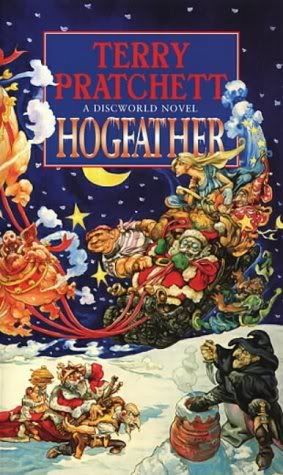
What Works: HOGFATHER by Terry Pratchett

Excerpt of Hogfather by Terry Pratchett

There was no doubt that whoever had shut it wanted it to stay shut. Dozens of nails secured it to the door frame. Planks had been nailed right across. And finally it had, up until this morning, been hidden by a bookcase that had been put in front of it.

"And there's the sign, Ridcully," said the Dean. "You have read it, I assume. You know? The sign which says 'Do not, under any circumstances, open this door'?"

"Of course I've read it, " said Ridcully. "Why d'yer think I want it opened?"

"Er...why?" said the Lecturer in Recent Runes.

"To see why they wanted it shut, of course."†


†This exchange contains almost all you need to know about human civilization. At least, those bits of it that are now under the sea, fenced off or still smoking.
The problem with trying to analyze humour is as soon as you try to determine what makes something funny, it stops seeming funny.

This is because surprise is an important part of humour. Humour consists of saying something that is recognizably true, but completely unexpected.

A joke's setup creates a scenario in the listener's mind.
An inebriated guest walks up to his host. "Mr. Hilcrombe, these lemons you've provided to flavour our drinks with are terrible!"

"What? I haven't provided any lemons."
The punchline twists the listener's assumptions in order to deliver an unexpected truth--an interpretation of that scenario that is valid, but a surprise.
"Oh, good heavens! Then I must apologize, sir; I've just squeezed your canary into my martini."
A simple knock-knock joke delivers a surprise interpretation of the answer to "Who's there?"
Knock, knock.
Who's there?
Esther.
Esther who?
The Esther bunny.
The final answer is unexpected, but it's a valid interpretation of the setup.

Satire--which is what Mr. Pratchett specializes in--consists of saying deeply critical things about our world and ourselves. What makes satire funny is most people won't say these things--either out of politeness or because they haven't thought about the matter that deeply. Thus, to hear the sentiments expressed aloud is unexpected.

When someone laughs at a crude and nasty joke, it's often because they didn't expect the other person to say something so socially discouraged. When they laugh at fine satire, it's because they didn't expect to hear such a deep truth expressed so incisively and, perhaps, so mercilessly. Cruelty isn't what ties these two different kinds of humour together, however; surprise is.

In the above excerpt, the punchline is in the footnote, the setup is in the text. Mr. Pratchett shows the reader a depressingly familiar scenario, and after reading it, the reader likely feels--in a vague sort of way--exactly the sentiment Mr. Pratchett is about to express coldly and incisively: Forget the cat; curiosity kills humans with regularity.

When Mr. Pratchett actually expresses this criticism of humanity, it's funny because we instantly recognize the truth in his words, but they're still a surprise. People don't usually say things so bluntly.

Most humour consists of this duality of recognition and surprise, although visual jokes don't always fit neatly into the definition. For example, in a skit from Monty Python's Flying Circus, John Cleese and Eric Idle are standing on some grass beside a body of water. Eric Idle slaps John Cleese across the face with a fish. The audience giggles because this is a surprising thing to see. But what truth is being recognized?

There isn't one, but the humour also isn't enormously funny--yet. As the skit progresses, Mr. Idle continues to slap Mr. Cleese in the face with the fish, and his body language gradually shifts from frightened to confident to arrogant as he does so.

Mr. Cleese simply stands there, staring in outrage at Mr. Idle. Then, just as the skit is becoming tiresome and Mr. Idle is mincing up to yet again slap Mr. Cleese, Mr. Cleese whips out a HUGE fish he had hidden behind his leg and wallops Mr. Idle across the side of the head, knocking him into the water. And the skit ends.

Now, the joke's setup and punchline are obvious. The setup was a series of minor outrages perpetrated against a blameless person. The punchline was straight-up vengeance. Who can't relate to wanting to give someone a taste of their own medicine, with accrued interest?

We recognize instantly why Mr. Cleese whacked Mr. Idle with the massive halibut, and our surprise comes from the fact we didn't expect him to do it; the skit hadn't primed us for anything except passivity from him.

IN SUMMARY:
What works in the above excerpt of Hogfather is the humour. The reader is shown a scenario under which lurks a deep truth about human nature. The punchline is provided when the author surprises the reader with that truth.

~~~~~~~

I'd like to do something different this week. Your thoughts (and dissent) in the comments section are always welcome, but for today's post, I'm assigning you homework:

1. Choose a piece of humour from any source (a book, a comedian's routine, a movie scene) and analyse why it's funny. What was the unexpected truth? Where did the surprise come from? Bonus points if you can do it for a piece of physical comedy; visual humour is often the hardest to decipher. Please post your analysis in the comments.

2. Using the concepts of truth-recognition and surprise, make up a brand new joke. Please post it in the comments section. (And if you require a straight man to pull off your joke, I'd be happy to act as your patsy!)

I look forward to seeing what you come up with!


Author website: J. J. DeBenedictis


And speaking of funny...

Thursday, July 01, 2010

Everybody Squee for Josh!

Please join me in flailing the pom-poms of victory and congratulations for Josh Vogt on the occasion of his getting an agent!

Good work, Josh! May we all be pouncing on your novels in our local stores soon!


Author website: J. J. DeBenedictis

Tuesday, June 29, 2010

Monday, June 28, 2010

What Works: "2001: A Space Odyssey" by Sir Arthur C. Clarke


This week's "What Works" post focuses on an excerpt from Sir Arthur C. Clarke's 2001: A Space Odyssey, but here's my secret: This passage isn't part of the novel--it's taken from the foreword.

The reason why I focus on it will become apparent later.

Excerpt from the foreword of 2001: A Space Odyssey by Sir Arthur C. Clarke

Behind every man now alive stand thirty ghosts, for that is the ratio by which the dead outnumber the living. Since the dawn of time, roughly a hundred billion human beings have walked the Earth.

Now this is an interesting number, for by a curious coincidence there are approximately a hundred billion stars in our local universe, the Milky Way. So for every man who has ever lived, in this Universe there shines a star.

But every one of those stars is a sun, often far more brilliant and glorious than the small, nearby star we call the Sun. And many--perhaps most--of those alien suns have planets circling them. So almost certainly there is enough land in the sky to give every member of the human species, back to the first ape-man, his own private, world-sized heaven--or hell.

How many of these potential heavens and hells are now inhabited, and by what manner of creatures, we have no way of guessing; the very nearest is a million times farther away than Mars or Venus, those still remote goals of the next generation. But the barriers of distance are crumbling; one day we shall meet our equals, or our masters, among the stars.
The first time I read this, it literally made my scalp prickle as all the hair on it tried to stand up. I re-read the passage about three times before I dove into the novel itself.

Now why is that? There is every possibility the passage does not affect you the same way. This writing is skillful and potent, but the fact it affected me so powerfully is quite personal.

You see, I'm a science geek and a lover of science fiction and fantasy. Since childhood, I've been fascinated by our universe and all the possibilities that sit on the edges of what we understand. And holy tamales, this excerpt resonated with me. There are worlds enough for all of us? That thought has occurred to me as well.

Please bear with me; because I'm a geek, I'm compelled to define what resonance is according to scientists:
A body vibrates at some steady rate. If its vibration disturbs a second object, that second object may begin to vibrate in time with the first object. In fact, the second object may begin to vibrate very violently in response to the first.

This phenomenon is called resonance.


(Whether or not the second object vibrates at all depends on something called its natural resonance frequency, but we don't need to get into that here.)
So when I say something resonates with me, what I mean is it formed a pattern and I spontaneously echoed that pattern. Or, put another way, Sir Arthur expressed a set of ideas, and those ideas slotted into my head so perfectly it was as if I had been on the brink of thinking them up myself.

In other words, when I read this passage, I spotted the common humanity I shared with the stranger who wrote it.

There are few experiences as emotionally powerful as discovering a common humanity with someone else, even it it's through the filter of a piece of art. However, that experience is always personal. If you're someone whose passion is for abstract painting, or Judo, or immunology, it's entirely possible this excerpt would seem, at best, only mildly intriguing to you. It wouldn't fire your imagination the way it did mine.

Now the one thing that turns a book into a bestseller is word-of-mouth endorsements--people don't trust advertising, but they do trust a referral born of pure enthusiasm. And what provokes this kind of enthusiasm? Resonance. I'm convinced people only gush over books that resonated with them.

As an example of this, I think many are confused by the rampaging success of the Twilight books. These novels aren't high art, and they don't contain any particularly fresh elements ('cept for the sparkling.)

However, what the author got right is she utterly nailed what goes through the heart of a teenage girl at a certain age. Young women read these books and thought, "Yes. This is the boy I've been yearning for; this is the intensity of passion I've been dreaming of. I get this."

The story resonated with its target audience, and because of that, the audience turned evangelical on the story's behalf. A literary star was born.

But to people who don't dream of a boy like Edward Cullen? The books' popularity just makes no sense. The novels don't resonate with them.

In the above excerpt, Sir Arthur expressed his own thoughts and dreams, things personal and compelling to him. The fact that these things resonated with me--or with anyone--was a matter beyond his control. All he could do, as a writer, was to ensure he was mining fearlessly for his own truths.

It's ironic that to reach a wider audience, we have to ferret deeper into ourselves, but that's all a writer can do. You write the best damned book you can--the truest, most powerful, most emotionally-naked story you have inside you--and then you get it out into the world and hope like hell it finds an audience.

It might not, but then again, it might. That's what communication of any sort is about--conveying what's inside of you in hope that someone else will understand, that their mind and heart will resonate in sync with yours.

IN SUMMARY: What works in this excerpt (for me) is that it resonated with me. The writer captured his own thoughts and emotions, laid them on the page clearly, and in those words, I recognized my own thoughts and emotions and thus felt I had connected with another human being.

~~~~~~~

What books have resonated with you? Have you ever read something that stood your hair on end, and if so, what was it, and can you identify why it did that to you--you in particular? I'd love to hear your experiences.


Author website: J. J. DeBenedictis

Saturday, June 26, 2010

Friday, June 25, 2010

Squee!


This one was on Janet Reid's blog--Ms. Reid being an awesomely feisty literary agent who I heard speak at SiWC 2007 and who runs the QueryShark blog.

The contest was to create a 100 word story featuring the words even, tramp, shuffle, lair, and epic, with bonus points for including the phrase till death us do part. The prize is the 10-CD audio version of Andrew Grant's new novel EVEN.

The prize is rather awesome, but possibly even better is the very kind praise from Ms. Reid regarding my entry:
And the winner of the contest is a jaw dropping gorgeous entry that used the required words with freshness and originality. This might be the best quick writing contest entry I've ever seen.
Please click through to Janet Reid's blog to read the entry. It, um, isn't the world's most coherent piece; I had to shave eighty words off it to bring it under the word limit. Heh.

All the same, squee! Many thanks to Ms. Reid for the contest, her generosity in creating and judging it, the 'mazing prize and her extremely kind words.

To be honest, when I read her announcement post, I first skimmed through her honourable mentions hoping I had at least managed to snag one of those and felt a little sag of disappointment when I realized I hadn't. Then I got to the winner and went, "Hey...waidaminute..."


Author website: J. J. DeBenedictis

Monday, June 21, 2010

Utterly Random Things

  • My last name is Latin, not Italian. The Italian equivalent would be De Benedetto, which is in fact a common name. Also, the "-is" ending on my name is plural, whereas an "-us" ending would be singular, so DeBenedictis means "of the blessings" rather than "of the blessing".

    I feel so ecclesiastical.

  • According to StatCounter, someone arrived at my blog after Googling the phrase "i want to stalk and kill someone".

    Well. I hope they got side-tracked completely and are now pursuing their vengeance via a writing career. Brrr...

  • On average, women taste bitter things more sensitively than men do. This possibly came from being the "gatherer" half of the hunter/gatherer equation; we were the ones tasting the mushrooms to judge their toxicity.

    Thus, this might explain why women go mad for chocolate and men don't. To women, chocolate is an amazing amalgum of bitter and sweet, but to men, it's just another sugary treat.

    It also might explain why men go mad for bitter ales and women choke on them.

  • There are 12 tests you (or your body, rather) have to flunk before the doctors consider you brain dead and start harvesting your organs.

  • Ooh! Ooh! Did I ever tell you about the time, at a party, when I met someone who worked for the eye bank and who went around, sometimes in the middle of the night, harvesting eyeballs from corpses?

    Yeah. I was utterly fascinated. But other people at the party eventually told me to stop asking questions.

    (Hey, guess what! Apparently the white part of your eyes, the sclera, feels like really soft, supple leather once it's cut free.)


  • The term "snake oil"--referring to a scam cure--comes from a supposed cure for gallstones. The patient was asked to drink a combination of oil and acid (lemon juice and olive oil would work), and this supposedly caused them to excrete their gallstones.

    In fact, they were excreting teeny bubbles of soap that formed in their stomachs. For the record, nothing you eat or drink gets into your gallbladder unless it's by way of your bloodstream. That little duct is a one-way street.

Wow, this post turned all biological on me.


Author website: J. J. DeBenedictis

What Works: "Snow Crash" by Neal Stephenson


This week's "What Works" post focuses on Snow Crash by Neal Stephenson.

Excerpt from Snow Crash by Neal Stephenson
The Deliverator belongs to an elite order, a hallowed sub-category. He's got esprit up to here. Right now, he is preparing to carry out his third mission of the night. His uniform is black as activated charcoal, filtering the very light out of the air. A bullet will bounce off its arachno-fiber weave like a wren hitting a patio door, but excess perspiration wafts through it like a breeze through a freshly napalmed forest. Where his body has bony extremities, the suit has sintered armorgel: feels like gritty jello, protects like a stack of telephone books.

When they gave him the job, they gave him a gun. The Deliverator never deals in cash, but someone might come after him anyway--might want his car, or his cargo. The gun is tiny, aero-styled, lightweight, the kind of gun a fashion designer would carry; it fires teensy darts that fly at five times the velocity of an SR-71 spy plane, and when you get done using it, you have to plug it into the cigarette lighter, because it runs on electricity.

[...*snip*...]

The Deliverator's car has enough potential energy packed into its batteries to fire a pound of bacon into the Asteroid Belt. Unlike a bimbo box or Burb beater, the Deliverator's car unloads that power through gaping, gleaming, polished sphincters. When the Deliverator puts the hammer down, shit happens. You want to talk contact patches? Your car's tires have tiny contact patches, talk to the asphalt in four places the size of your tongue. The Deliverator's car has big sticky tires with contact patches the size of a fat lady's thighs. The Deliverator is in touch with the road, starts like a bad day, stops on a peseta.
So who is The Deliverator? He's a pizza delivery boy--a pizza delivery boy in a world where corporations rather than countries rule the planet, and an employee failing to deliver his customer's pizza in thirty minutes may be out of a life rather than simply out of a job.

This excerpt shows off one of the most potent and enjoyable aspects of Neal Stephenson's writing: his voice.

Here's the power of that voice: Ask yourself how the protagonist (his name is Hiro Protagonist, by the way; har, har, Mr. Stephenson) talks to people. Ask yourself how he behaves around others.

At this point, you probably have a pretty good idea what this man is like to be around, and yet you haven't actually heard Hiro speak to anyone or seen him act. Your impression comes from Mr. Stephenson's writing voice, which he has tuned to match his protagonist's character. The cadences of Hiro's speech, the patterns of his thoughts, are mimicked here by the author.

You can tell Hiro takes a typically male delight in slick technology and high performance gadgets. You can tell he's cocksure, effortlessly cool, and takes a swaggering pride in how well he does his job.

But here's the big deception: take a look at the excerpts again. All of that is telling not showing.

What?! Doesn't that break one of the fundamental rules of writing? Oh, it totally does, but it also totally works. The first reason why is that we are being shown some important things. First: Hiro's personality. A braggart talks this way about himself, and we're learning about Hiro through witnessing this representation of his inner thoughts. Second: We're learning a lot about how seriously either Hiro or his employer takes the job Hiro is hired to perform; that's a lot of expensive gear he's got with him.

The second thing that helps redeem this long patch of "telling" is it is heavily laced with visuals, so even if we're not being "shown" Hiro, we're seeing a lot of images in our imagination.

...like a wren hitting a patio door...
...like a breeze through a freshly napalmed forest.
...feels like gritty jello, protects like a stack of telephone books.
...to fire a pound of bacon into the Asteroid Belt.
...gaping, gleaming, polished sphincters.
...four places the size of your tongue.
...big sticky tires...the size of a fat lady's thighs.


I will note the reason we see these things in our imaginations is they are not clichés. Each of these descriptions is apt, easy to imagine, and utterly unusual. And because each statement is an abnormal choice of words, we must imagine the image in order to understand what the author means.

In other words, the author has successfully engaged our mind in the world of the novel. If Mr. Stephenson had said, "His uniform is black as night, absorbing the light. A bullet will bounce off it like a pea, but excess perspiration wafts through it like wind through the trees", we possibly wouldn't picture a thing. The sentence would still be clear and understandable, but steeped in clichés as it is, our imagination could remain uninvolved with the process of reading the story.

The last thing that keeps this excerpt highly readable is, again, the quality of the writing voice--the pure charisma of it. We are listening to Hiro's mind talk, but that speech is flamboyant and energetic and laced with many funny and wonderful visual images. It's a captivating voice. This is somebody you would gravitate toward at a party--even if he was someone you didn't actually like.

The reason why we writers are told to "show", instead of "tell", is because most people "tell" by default when they begin writing fiction, and they usually don't do it very well. By learning to "show", they then become much more effective at engaging the reader's imagination.

But Mr. Stephenson proves something we writers often forget or try to disbelieve--that "telling" works when it's done by a skillful enough storyteller.

The aim of writing fiction is to slurp the reader into the story, to engage their imagination, and to keep the reader so well-rewarded for their attention that they can't put the book down until the last page. As long as the author does this, the tools he or she uses are immaterial. "Telling" is just another tool--a dangerous one in the hands of amateurs, but as effective as "showing" in the hands of a master.

In order to "tell" effectively, you need (1) a genuinely charismatic voice, (2) fresh language that engages the reader's senses and imagination, and (3) you need to be laying down important information.

The reason why first person POV is very, very hard to do well is because everything gets filtered through the protagonist. There is necessarily a lot of "telling" required to convey the world of the novel to the reader, and often the writer doesn't satisfy the three points above or doesn't do so consistently throughout the novel.

My least favourite encounters with first person POV in novels are when I find myself deluged with unimportant information such as how the protagonist looks or dresses or how hot they think their friend is. Is this character someone I would gravitate toward at a party? No, it's the yatterer who won't shut up about themselves and their own slight concerns--the person I try to avoid.

In the above excerpt, we learn how Hiro is dressed, but it's relevant information. It establishes what his job is like, what his world is like, and it sets the novel's tone. It also gives Mr. Stephenson opportunity to throw in some of his wonderful "eyeball kicks" (eyeball kick: those abrupt, specific images you experience while reading a very visual piece of writing.)

The description of Hiro's clothing is also quite brief. The difference between a good writing voice and an annoying one is often a matter of degree--if you can imply all the information you need in one sentence, then do it.

If you're not sure how much patience your reader will have for your protagonist's inner thoughts, the rule of thumb is, "Would I attach myself to the elbow of a person who talked like this at a party, or plot my escape from them? Especially if I didn't know them at all?" Often you can determine when it's time to shut your protagonist up and get on with the action based on that criteria alone.

IN SUMMARY: What works in this piece is the strength of the writing voice, which is a combination of potent visuals, cliché-free writing, and the establishment of the protagonist's native charisma.

~~~~~~~

What do you think makes this piece engaging? Is there anything about it that turns you off? Do you agree with me that Mr. Stephenson is "telling" rather than "showing" here?

Do you agree with my criteria for what makes "telling" engaging? What would you add to my list? Subtract from it? Do you disagree with my comments about first person POV? I'd love to discuss it with you.


Author website: J. J. DeBenedictis

Wednesday, June 16, 2010

What Works: Arthur Golden's "Memoirs of a Geisha" (A New 'Meaty Mondays' Series)


A week-and-a-wittle ago, Sarf had a fantastic suggestion for my "Meaty Mondays" posts. He encouraged me to post story excerpts and discuss what works or doesn't work in a particular passage.

Now, I'm of the opinion there's far too much negativity in the world because negativity is easy. It's always harder to pin down what is magical and awesome than to spot what's wrong. Thus, this series of posts will feature an excerpt of writing, then discuss in detail one thing that passage does right.

We're all about positivity here! And also about figuring out what to do, rather than what not to do.

This week's Meaty Monday post (I postponed Monday) will discuss in detail an excerpt from Arthur Golden's book Memoirs of a Geisha.

Excerpt of Memoirs of a Geisha by Arthur Golden
I didn't know it at the time, but after the closing of the lens factory where she'd worked, Pumpkin spent more than two years in Osaka as a prostitute. Her mouth seemed to have shrunken in size--perhaps because she held it taut, I don't know. And though she had the same broad face, her heavy cheeks had thinned, leaving her with a gaunt elegance that was astonishing to me. I don't mean to suggest Pumpkin had become a beauty to rival Hatsumomo or anything of the sort, but her face had a certain womanliness that had never been there before.

"I'm sure the years have been difficult, Pumpkin," I said to her, "but you look lovely."

Pumpkin didn't reply to this. She just inclined her head faintly to indicate she'd heard me. I congratulated her on her popularity and tried asking about her life since the war, but she remained so expressionless that I began to feel sorry I'd come.

Finally after an awkward silence, she spoke.

"Have you come here just to chat, Sayuri? Because I don't have anything to say that will interest you."

"The truth is," I said, "I saw Nobu Toshikazu recently, and...actually, Pumpkin, he'll be bringing a certain man to Gion from time to time. I thought perhaps you'd be kind enough to help us entertain him."

"But of course, you've changed your mind now that you've seen me."

"Why, no," I said. "I don't know why you say that. Nobu Toshikazu and the Chairman--Iwamura Ken, I mean...Chairman Iwamura--would appreciate your company greatly. It's as simple as that."

For a moment Pumpkin just knelt in silence, peering down at the mats. "I've stopped believing that anything in life is 'as simple as that,'" she said at last. "I know you think I'm stupid--"

"Pumpkin!"

"--but I think you probably have some other reason you're not going to tell me about."

Pumpkin gave a little bow, which I thought very enigmatic. Either it was an apology for what she'd just said, or perhaps she was about to excuse herself.

"I suppose I do have another reason," I said.
Arthur Golden's Memoirs of a Geisha is beautifully written and evocative, but the above passage is also a textbook-perfect example of how to structure a scene.

It's so classic, in fact, that I'll analyse it the way Robert McKee suggests in his screenwriting book Story.

In that book, Mr. McKee notes that your protagonist needs a goal and she should take action in hope of getting closer to her goal. However, each action she takes should be met with a reaction from the world that is not what the protagonist expected.

In some cases, 'the world' is in fact another character, and that character's reaction to your protagonist is what thwarts the protagonist's hopes. This is because the second character has a goal that conflicts with your protagonist's.

Mr. McKee goes further; he says each time your character is thwarted from getting to her goal, she should take another action to try to fix that. However, this second action must necessarily involve more risk to the character.

In other words, the character first tries to do the easy thing to reach her goal, and when that doesn't work, she must try something harder/riskier. When that also fails, she then has to risk herself even more, and so on with each subsequent failure to reach her goal.

Thus, in a scene with two characters in conflict with one another, such as in the example above, there is escalating tension. The two characters must slowly risk themselves to greater and greater extents as they try to bend the situation to their will.

This progresses up to the scene's turning point, where something happens that changes the situation irrevocably. This usually means the characters have pushed themselves to the limit and something has finally snapped--perhaps someone blurted out a damning fact, or took an unforgivable action, or maybe they simply made a firm decision that will propel both people in a new direction. I cut off the above scene right before the turning point.

So what are Sayuri and Pumpkin's goals? First, let me explain a bit of their backstory so you understand the stakes.

As teenagers, Sayuri and Pumpkin trained together to become geisha, but World War II split them. Now Sayuri has returned to being a geisha, and she was recently asked by a man she secretly loves (the Chairman) to entertain a business associate who happens to be a very crude and stupid man. Sayuri dreads this, and she wants Pumpkin--who she perceives to be more earthy than herself--to help her entertain the business associate.

However, Sayuri's success as a teenaged geisha came very starkly at the expense of Pumpkin's--a fact that Sayuri either doesn't fully recognize or optimistically hopes won't matter now. Pumpkin, however, is both aware and resentful of it.

Thus, in this scene, Sayuri's goal is to enlist Pumpkin's help, and Pumpkin's goal is to give Sayuri nothing and, in fact, to get rid of her.

Let's now analyze the scene by outlining the actions and reactions of the characters, paying particular attention to the subtext of the situation. ("Text" is what the characters actually say; "subtext" is what they really mean.)

As we go through the dialogue, you'll note the characters do risk themselves to greater and greater degrees as the scene progresses. Specifically, they begin to tell the truth, and in doing so, they expose their real feelings. For individuals steeped in the social anxiety and stiflingly-polite culture of Japan, this is risky behaviour.

SCENE ANALYSIS

Sayuri: I'm sure the years have been difficult, Pumpkin, but you look lovely.
Subtext: I'll gloss over the awful events of the war and compliment you to rekindle our friendship.
Expectation:
Our meeting will go happily and you'll do me this favour.

Pumpkin: (nods)
Subtext: You don't really mean that compliment, and I don't really want you here.
Expectation:
You'll take the hint and stop intruding on my life.

Sayuri: (Congratulates her on her popularity, tries asking about her life since the war)
Subtext: The compliments don't seem to be enough... Alright, I'll still avoid the unpleasant war years, but I'll take more interest in your life.
Expectation:
You'll remember we used to be friends and soften toward me.

Pumpkin: Have you come here just to chat, Sayuri? Because I don't have anything to say that will interest you.
Subtext: You don't seem to be taking the hints, so I'll be a bit more obvious. I don't want to be your friend, and I can't believe you want to be my friend.
Expectation: You will back off.

Sayuri: The truth is, I saw Nobu Toshikazu recently, and...actually, Pumpkin, he'll be bringing a certain man to Gion from time to time. I thought perhaps you'd be kind enough to help us entertain him.
Subtext: Okay, I'll be honest--wait, no, maybe not completely. But I'll open up about the fact I'm here to ask a favour.
Expectation:
You'll be nice once you hear this very reasonable request from your old friend.

Pumpkin: But of course, you've changed your mind now that you've seen me.
Subtext: I've been a whore for two years. I disgust myself; I must disgust prissy little you. So how about I make it easy for you to wiggle out of this conversation? I certainly want you gone.
Expectation:
You'll be offended and embarrassed by my bluntness and make your exit.

Sayuri: Why, no. I don't know why you say that. Nobu Toshikazu and the Chairman--Iwamura Ken, I mean...Chairman Iwamura--would appreciate your company greatly. It's as simple as that.
Subtext: I'll chide you a little on your rudeness, but I'll also be a bit more honest about why this is important to me. However, I must keep my feelings for the Chairman secret.
Expectation:
You'll realize you're being unreasonable.

Pumpkin:
I've stopped believing that anything in life is 'as simple as that,'
Subtext: What a load of B.S. You are totally up to something.
Pumpkin: I know you think I'm stupid--
Subtext : I know the disdain you've always felt for me.
Expectation: I'm going to go on the offensive, and you will back off.

Sayuri: - Pumpkin!
Subtext: Why is this not working? Why would you think I'd think such a terrible thing about you?

Pumpkin: --but I think you probably have some other reason you're not going to tell me about. (Pumpkin bows, perhaps signaling she intends to leave.)
Subtext: So there. I'm smart enough to see through you and will never let you use me again.
Expectation: The truth in my rebuke is going to scare you off, but even if it doesn't, I'm ending this conversation now.
Note: This is an example of 'on the nose' dialogue, but it works well here because telling the truth is the riskiest behaviour in this situation/society. Pumpkin has pushed herself to the limit to get what she wants.


Sayuri: I suppose I do have another reason.
Subtext: OMG, she's leaving. I have to be honest now; nothing less is going to work.
Expectation: I can still win this if I try just a bit harder.
Note: And now Sayuri pushes herself to the limit too. The turning point of the scene comes right after this.


Notice how every step of the way, these characters are digging deeper into themselves to get what they want. They start out with a very superficial interaction, both of them anticipating an easy resolution, but by the end, they're--so to speak--going for the nuclear option: they're speaking the unvarnished truth.

Also note how much I wrote in the form of subtext compared to how much the characters actually say. Good writing implies volumes using very few words. These sentences have been pared down to say exactly what the author wanted to in as concise a way as possible. Each word is precise and carefully chosen with regard to nuance.

Another interesting point is that if you speak this dialogue aloud, the exchange wouldn't last much longer than 60 seconds. That's a pretty short conversation, isn't it? The fact is, dialogue isn't like real human speech. When done well, it is convincing as such, but people don't talk like this. The writer has a luxury of time to finesse his or her sentences into concise, eloquent perfection; real people just can't think that fast.

SUMMARY: What works best in this passage is the escalating tension caused by each of the characters trying ever-harder to get what she wants in the face of opposition.

~~~~~~~

Have you any comments to add to this? What else do you think works well in this passage? Is there anything you think doesn't work? I'd love to hear your thoughts!


Author website: J. J. DeBenedictis

Tuesday, June 15, 2010

The 'Ten Little Piggies' Contest


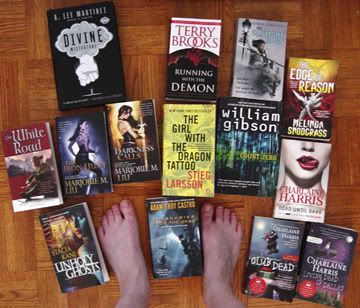
El Husbando just dumped these books in our laundry hamper in silent protest of the fact I've been storing them on the floor and he keeps stubbing his toes on them.

The ten little piggies shown are in fact mine, not his, and the books themselves have been gathering dust (and toes) mainly because I finished them but haven't gotten around to donating them to the hospital yet.

Which is another way of saying they're up for grabs. Let's have a contest instead!

In honour of my husband's ten aggrieved little piggies, I have split these books (plus four others I just unearthed from beneath the bed) into the following ten prize packs.

Prize pack 1 won by Sarah Laurenson!
Prize pack 1: [The "Tattooed Lady" Collection]
  • The Iron Hunt by Marjorie M. Liu (book 1 of series)
  • Darkness Calls by Marjorie M. Liu (book 2 of series
Prize pack 2 won by FairyHedgehog!
Prize pack 2: [The "Whiter Shade of Pale" Collection]
  • The White Road by Lynn Flewelling (warning: 2nd book of duology)
  • Trick of the Light by Rob Thurmon

Prize pack 3 won by McKoala!
Prize pack 3: [The "Sookie" Suite]
  • Dead Until Dark by Charlaine Harris (book 1 of series)
  • Living Dead in Dallas by Charlaine Harris (book 2 of series)
  • Club Dead by Charlaine Harris (book 3 of series)

Prize pack 4: [The "Demons and Doggies" Collection]
  • The Edge of Reason by Melinda Snodgrass
  • The Gaslight Dogs by Karin Lowachee

Prize pack 6 won by Merry Monteleone!
Prize pack 5:
  • Emissaries From the Dead by Adam-Troy Castro

Prize pack 6: [The "Transparent" Twosome]
  • Unholy Ghosts by Stacia Kane
  • Thief With No Shadow by Emily Gee

Prize pack 7:
  • The Girl With the Dragon Tattoo by Steig Larsson

Prize pack 8:
  • Running With the Demon by Terry Brooks

Prize pack 9 won by Michelle Massaro!
Prize pack 9:
[The "Nobility" Collection]
  • Count Zero by William Gibson
  • First Lord's Fury by Jim Butcher (warning: 7th book of septology)

Prize pack 10: [The "Luck and Lunatics" Collection]
  • Divine Misfortune by A. Lee Martinez
  • Magickeepers by Erica Kirov

So how do you win one of these prize packs? There are three ways to enter!
  1. Convince five people who have never commented on my blog to do so. They must name you in their comment in order to be counted toward your total, and they are free (and encouraged) to compete with you by drumming up their own fivesome of commenters!

  2. Write me a humourous poem of at least 100 words and post it here. Multi-verse haiku are especially welcomed.

  3. Link to The Writer's Weigh Scale on any two writer's forums or blogs, then leave me a comment saying where you left the references (please include the URLs.)
The first person to "win" gets their choice out of all the prize packs. The second person chooses from the remaining nine packs, and so on until all the books are gone. You can enter more than once by satisfying a requirement more than once.

I will mail the prize packs anywhere in the world, but I reserve the right to use El-Cheapo-Slo-Mo service if you're separated from me by sufficient quantities of brine.

Oh, and if I can't get in touch with you, I have to consider you disqualified and pass your prize on to someone else. Make sure you leave me some way to contact you; if I can click through and comment on your blog, that'll do the trick.

Any questions? Ask them here. Otherwise, good luck and enjoy yourselves!

~~~~~~~
BREAKING NEWS 0001: FairyHedgehog is our first winner!
~~~~~~~
BREAKING NEWS 0010: Michelle Massaro wins a prize pack!
~~~~~~~
BREAKING NEWS 0011: FairyHedgehog wins a second prize!
~~~~~~~
BREAKING NEWS 0100: McKoala wins a prize pack!
~~~~~~~
BREAKING NEWS 0101: Sarah Laurenson wins a prize pack! (Donated to Merry Monteleone.)
~~~~~~~
BREAKING NEWS 0110: Merry Monteleone wins a prize pack for writing in the face of danger!
~~~~~~~


Author website: J. J. DeBenedictis

Monday, June 14, 2010

The Writer's Weigh Scale

My n00b PHP skills have been put to the test again!

Please click the link below and behold my latest creation:

The Writer's Weigh Scale


This is a tool for calculating how much an envelope with pages and an SASE weighs. It's for those evenings when you MUST mail something, but the post office is already closed. (In other words, when it's the last day of the month and you're trying to avoid a butt-shredding from McKoala in her Year of Submission challenge.)

To affix proper postage to your envelope, all you need to know is its mass, correct? The Writer's Weigh Scale calculates that for you, because goodness knows a bathroom scale is useless for a fifteen-page story.

Now, here's my dread' secret: I don't have very accurate mass values for the envelopes yet, particularly the non-North American sizes. For that matter, I don't even know if the DL, C5 and C4 envelope sizes are really the most commonly-used ones for people who type on A4-sized paper.

Hence, I have a favour to ask of my UK friends (bats eyelashes at FairyHedgehog and Whirlochre). Could you:
  1. Let me know which envelope sizes you normally use for story submissions and SASEs? Measurements are fine if you don't know the actual name for that type of envelope.

  2. If you have access to an accurate scale, could you weigh one (or even better, a stack) of any of these envelopes and tell me the mass(es)? Thank you in advance to anyone who can help me out with this!
As for my 'Merican de la North friends, you're also welcome to weigh envelopes for me and report the results, although I will get around to that myself eventually, assuming I remember to schlep some envelopes in to work with me one of these days.

I hope you'll find The Writer's Weigh Scale useful. Please feel free to disperse the URL to anyone you think might also find it handy.

And finally, do you have any suggestions for how to make The Writer's Weigh Scale better? When you tried it out, did you discover any glitches? Please let me know of anything you think should be improved, and thank you very much for your help!


Author website: J. J. DeBenedictis

Monday, June 07, 2010

Voyage to the Centre of My Navel


Okay, so this blog has been devoid of real content for a solid month now. Part of this has been due to writerly funk, part is due to a dearth of ideas, and part is due to the following:

Recently, I had the slightly-creepy realization my blog has similarities to those evangelical Christian newspapers you can pick up for free. If you've ever rustled one of those open by mistake, you know the articles start out sounding concrete and relevant to the modern world and then wriggle themselves into a sermon. That's not necessarily a bad thing, provided you're feeling open to some spiritual inspiration that day, and are sympathetic to the Christian worldview. The problem is, I'm pretty humanist and geekish, and I get suckered in specifically because the headline implied the article was going to be a lot more worldly than it is. Thus, I tend to feel let down as soon as I realize the article is essentially an opinion piece about religion.

And therein lies the reason I started feeling disturbed by my own blog. A bunch of my posts are essentially opinion pieces about publishing and writing, and I do have a tendency to start out talking about one subject and then twist it around until I'm talking about writing. Again, that's not necessarily a bad thing, but it is a form of bait-and-switch, and I wonder if my audience (o hai, u guiz) occasionally feels annoyed by it.

The reason I do all this is because I'd like my blog to be genuinely helpful and informative to other writers, but oops, I don't necessarily understand that much. Frankly, I'm grubbing for topics here. And what I do understand is specific to me; the more I learn about writing, the more I realize there're a thousand ways to do it well, and everyone has to figure out their own personal method. Employing other people's techniques is, at best, a character-building exercise to help you achieve your own unique style a little faster. Thus, my views are--by definition--of limited utility to others because they're mine.

I don't know how to sort this out. I could relax my criteria for what I blog about to include personal stuff, whimsy, and unfinished thoughts. However, then I worry about what Kate In The Closet said in her very useful series of posts regarding creating an author website. She said: "[T]he purpose of your site is to get your user to perform a specific action".

What's my intended action for you? To have you keep coming back. Yes, I'm out to ensnare your minds, my sweet unsuspecting pretties. And I want to do it with quality content.

However, personal stuff, whimsy and unfinished thoughts aren't necessarily quality content. They're better than no content, and not-blogging is the thing I'm struggling with lately. Nevertheless, I worry that blogging about stuff that isn't specific and thought-provoking could be more harmful than helpful to my aims.

I probably shouldn't overthink this. It's just a blog, right? The bar isn't that high.

So I'll wave the standard white flag and just ask: What sort of things would you guys be interested in talking about? What topics do you think it would be cool to read about? What kinds of fluff would you enjoy?


Author website: J. J. DeBenedictis

Thursday, June 03, 2010

Exit Aroma by Calvin Klein

This...

...this falls under the category of "I'm not sure humanity needs this innovation, but dang, ain't we a pack of sharpies?"

Also known as "Yep, it's the future."
Better-Smelling Farts Through Jelly Bean Technology

A Ukrainian perfume company claims to have invented a jelly bean capable of producing perfumed farts.

The candies are being produced in a number of varieties, from generic “fresh office” to specific smells which mimic famous perfumes.

After being eaten, they produce what the company call “exit aromas” — which are said to be as effective as air fresheners.

Link via Metro World News and Mom

Author website: J. J. DeBenedictis

Tuesday, June 01, 2010

Free Stuff! Free Stuff!

Writtenwyrdd is giving away a copy of Mind Games by Carolyn Crane in a sooooper-duper easy-to-enter contest. Just leave Writtenwyrdd a comment on the following post:

CONTEST!!!


Author website: J. J. DeBenedictis

Pageloads since 01/01/2009: